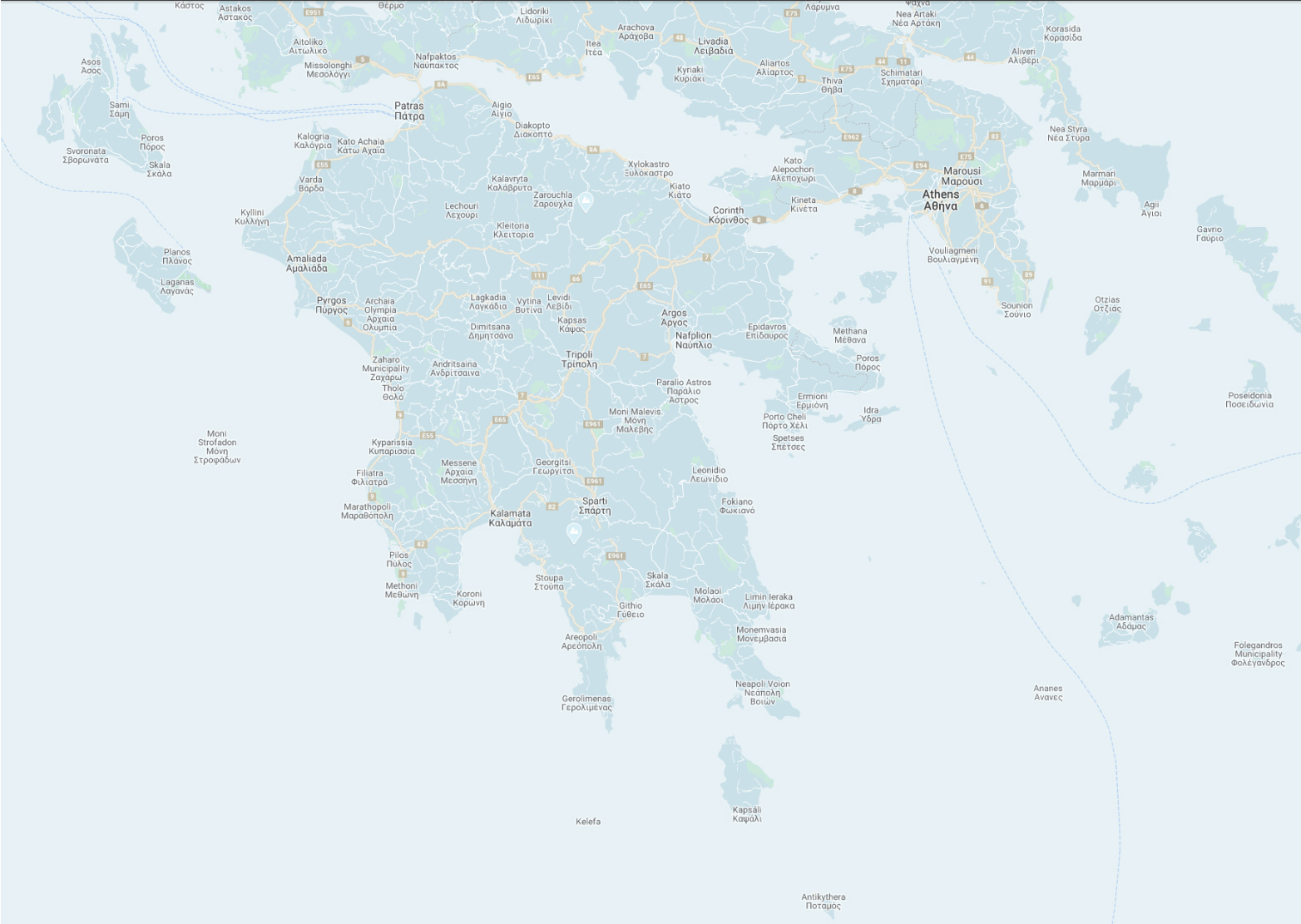
Messinia will take your breath away. This land filled with contrasts and welcoming inhabitants is only two hours drive away from Athens. See its vast olive groves, green valleys, mountains, gorges and coves. Numerous small or long sandy beaches, with calm waters or huge waves that will satisfy families or aspiring surfers. Small mountainous cliff-hanging villages with breathtaking views will blow your mind away...
1 black pepper in grainsbsp. fresh thyme (its leaves)
FOR THE MARINARA
1 fresh oregano (its leaves)
1 fresh thyme (its leaves)
1 garlic
2 honey
2 mustard
Execution
According to the legend, the first temple of Apollo at Delphi was made of laurel branches, the second of beeswax and feathers, and the third of bronze, while the fourth was built by the legendary architects Trofonios and Agamedes aided by Apollo himself. This was probably the stone temple destroyed by fire in 548 BC. Its replacement, built with contributions by both Greeks and non-Greeks, was completed around 510 BC by the Alkmaeonid family of Athens.
This was a Doric peristyle temple, with six columns at the end and fifteen at the sides. Stone-built and marble-clad, it was sumptuously decorated with sculptures by the famous artist Antenor. The east pediment depicted Apollo's epiphany when he arrived at Delphi with his sister Artemis and his mother Leto; the chariot of the gods occupied the centre of the scene and was framed by male and female figures. Of the west pediment, which depicted the Gigantomachy, only the figures of Athena, a fallen giant, a male figure and two horses have survived.
This temple was destroyed by earthquake in 373 BC. The existing temple, also built with Greek contributions, was not completed until after the Third Sacred War, in 330 BC. This imposing Doric temple was raised by the architects Spintharos from Corinth, Xenodoros and Agathon. It has the same plan and roughly the same dimensions as its predecessor, with six columns at the end and fifteen at the sides, and both prodomos and opisthodomos in antis.
The cella was divided into three naves by two colonnades of eight Ionic columns each. The divination ceremony took place in the adyton, or inner shrine, an underground chamber where only the priests interpreting Pythia's words had access.


 Airport